
Finding People Across Acworth
A useful Acworth people search begins with the fact already known. A full name can lead to a court party index, deed index, business filing, or professional license. A street address works better in Cobb GIS and the tax assessor system. An old address may call for deeds, probate files, historic directories, or cemetery evidence. A phone number from a city service page identifies an office, not necessarily an individual.
Confirm identity with a second fact before joining records. Middle initials, a parcel number, a known business, a relative, and a case number can separate people with similar names. An assessor mailing address is only a lead, and a court filing does not prove an outcome. Use the record's own identifiers to request the underlying file.
Official sources and commercial compilations serve different roles. County and state systems explain where a fact came from and identify the custodian that can certify it. Commercial results may be fast, but they can merge people or retain old addresses. Use them only as leads, then return to the deed, docket, license, or vital-record office for confirmation.
| Source path | Best use | Limit |
|---|---|---|
| Official index | Find a record number | May omit the image |
| Custodian copy | Verify the filed record | Fees or eligibility may apply |
| Library or archive | Trace older people | Some material is onsite only |
- Confirm whether the address is inside Acworth city limits and Cobb County.
- Search the most relevant name, address, parcel, or case index.
- Compare names, dates, roles, and record numbers across results.
- Open the source image or request the file from its custodian.
- Use libraries and archives when the online coverage ends.
Acworth People Search Offices
Acworth City Hall handles city-created records, but most lasting identity trails lead to Marietta, the Cobb County seat. The Superior Court Clerk records land instruments and keeps superior-court and divorce files. Probate Court handles estates and Cobb marriage licensing. The assessor connects names and mailing addresses to parcels. Detailed access rules and request steps belong with Acworth public records.
Each office answers a narrower question. City minutes may name speakers, appointees, applicants, and parties to city action. Probate files may identify an estate representative or heirs. Deeds identify parties to a recorded transfer, while the assessor shows the tax record for a parcel. Asking the correct custodian for a named series saves time and reduces false matches.
Fix Acworth Record Geography
An Acworth mailing address does not always identify the government that keeps its records. Incorporated Acworth lies in Cobb County, yet the postal area can extend into Cherokee, Paulding, or Bartow County. City minutes, licenses, and court files apply only when the event falls under city jurisdiction. Start with the parcel or address, not the ZIP code alone.
The city-limits guidance helps distinguish a city property from a postal-only address. For land, Cobb GIS supplies a stronger jurisdiction check. This step prevents a false no-result caused by searching the right name in the wrong county.
Geography also changes the courthouse. An incorporated-city matter may create an Acworth clerk or Municipal Court record, while a deed, estate, or superior-court case normally leads to Cobb offices in Marietta. If the parcel is beyond Cobb, repeat the search with the actual county rather than assuming Acworth agencies cover every address bearing the city name.
Lawful use: Public access does not permit stalking, harassment, intimidation, or attempts to defeat an address-protection program.
Acworth Property Search Paths
A street address can reveal an owner through the Cobb GIS Property Search. Enter only the house number and street name. The county tells users to omit an apartment or unit, city, state, and ZIP. The result routes to parcel material that can link the situs address, meaning the physical site, with the tax owner's record.
The official Cobb address screen below shows the format used for an Acworth lookup.
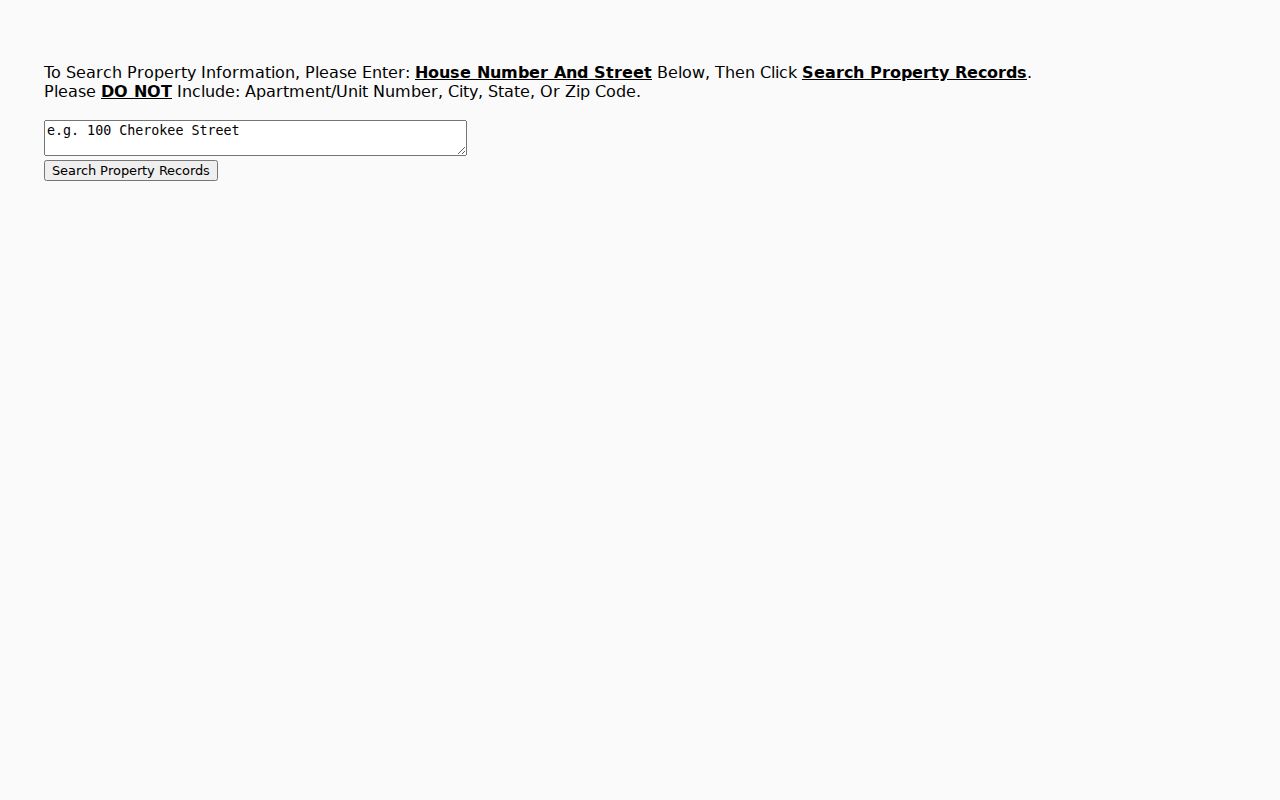
After finding the parcel, compare the owner and mailing address in the assessor system, then verify title in the deed index. Tax ownership and occupancy are not the same fact.
The parcel ID is the strongest bridge between systems. It can keep an Acworth property aligned when a street name changes, a mailing address differs from the site, or two owners share a similar name. For older work, carry the legal description, land lot, district, subdivision, and plat reference into the deed search.
| Search detail | How Cobb accepts it | Why it matters |
|---|---|---|
| House number | Separate numeric field | Narrows the parcel |
| Street name | Name without city or ZIP | Avoids formatting failures |
| Unit | Omit it | The parcel is the base record |
Acworth Deed Name Search
The Cobb Superior Court Clerk and GSCCCA Real Estate Search connect people to deeds, security deeds, liens, and plats. Search a seller as grantor and a buyer as grantee. A book and page or county file number identifies the recorded instrument. The legal description and land-lot details help distinguish similar names.
- Grantor
- The person or entity transferring an interest.
- Grantee
- The person or entity receiving that interest.
- Index
- A locator for a record, not always the complete document.
- Plat
- A recorded drawing that describes lots and boundaries.
Statewide index and image access can vary by county and subscription. If an image is missing, use the Cobb clerk's deed books or request a copy by instrument identifier. Never treat a missing web image as proof that no deed exists.
A chain of title follows each transfer backward. Start with the current assessor owner, locate that acquisition deed, then search the prior owner as grantor for the next link. Probate, divorce, foreclosure, or entity filings may explain a change that a simple owner list cannot. Certified copies come from the clerk, not from a screenshot of the index.
Acworth Court Records Lookup
Cases tied to Acworth can sit in several courts. Municipal Court handles city ordinance and traffic matters. Cobb Superior, State, Magistrate, and Probate courts maintain their own case types and access routes. Search a party name with variants, then use the case number, party role, filing date, and disposition to identify the right docket.
A docket is the court's event list, not a judgment by itself. State Court warns that online data may lag until the next day and that the clerk's official record controls. Juvenile, adoption, sealed, and other confidential matters may not appear. The clerk counter or a focused copy request is the proper fallback.
For Cobb Superior Court mail copies, the clerk requires a written request, advance payment by cashier's check or money order, and a self-addressed stamped envelope. Personal checks are not accepted. Request the exact case number and document when possible. Federal party searches use PACER and the Northern District of Georgia rather than the county portals.
| Court | Covers | Name Search | Access |
|---|---|---|---|
| Cobb county courts | Civil, criminal, probate | Cobb court systems | Online index, clerk request |
| Acworth Municipal Court | Ordinance, traffic | No verified party index | Court records request |
| Northern District of Georgia | Federal cases | PACER | Account and usage fees |
Acworth Custody Record Searches
The Cobb inmate inquiry covers the Adult Detention Center. Georgia's Department of Corrections portal covers state custody and supervision. Those systems answer different questions, so check the county tool for a current local booking and the state tool for a person in the Georgia corrections system.
The official Georgia DOC offender query accepts GDC ID, case number, last name, first name, gender, race, age range, and most recent institution.
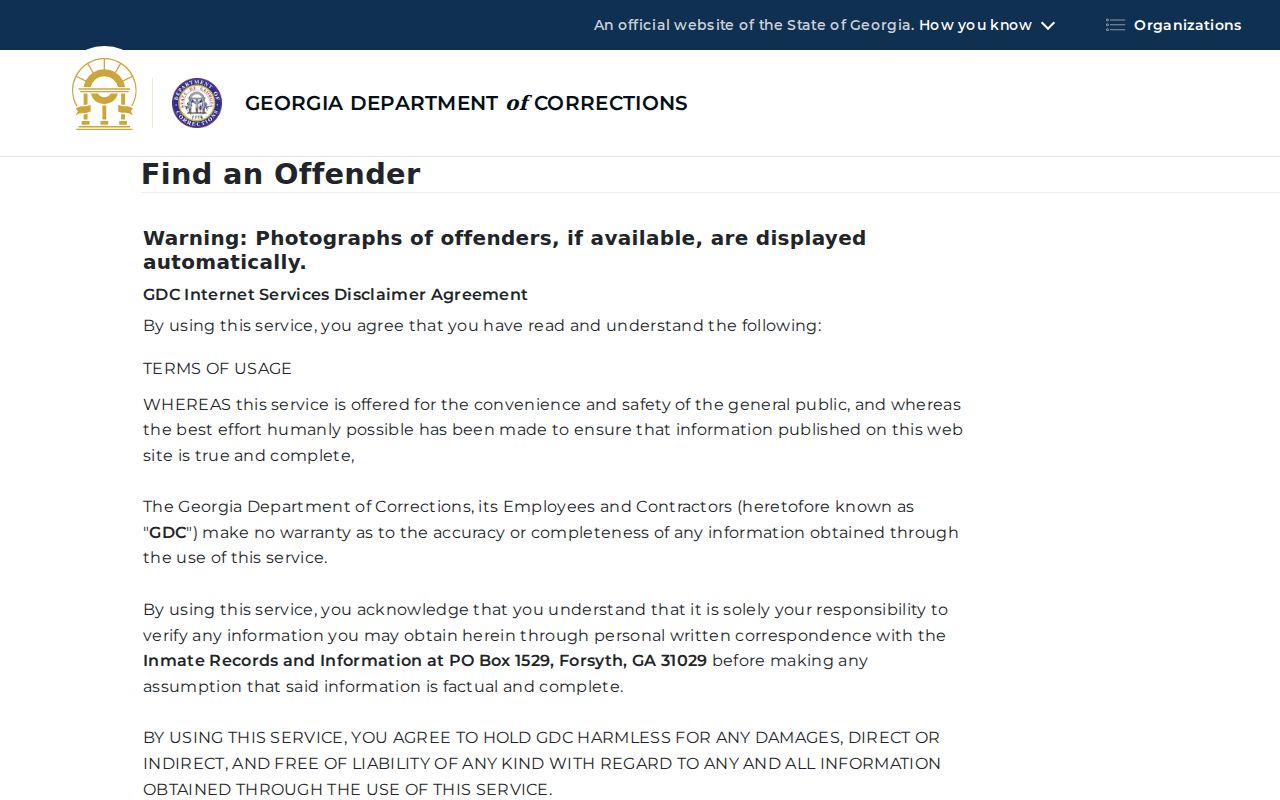
Returned fields can include identity details, status, offense data, and facility information. Verify current status with the responsible agency because transfers and releases change.
A name-only match is weak. Compare age, physical description, identification number, sentence or case details, and the most recent institution. County bookings, state corrections records, and court dispositions are separate records with different update cycles. None should be used to infer facts beyond what the source states.
Acworth Registry Safety Checks
The Georgia Bureau of Investigation registry offers name and location-based access to statutory registry information. It is a safety resource, not a license to contact or threaten a listed person. The GBI warns against harassment and misuse.
The official registry access page below directs Acworth users into the statewide system.
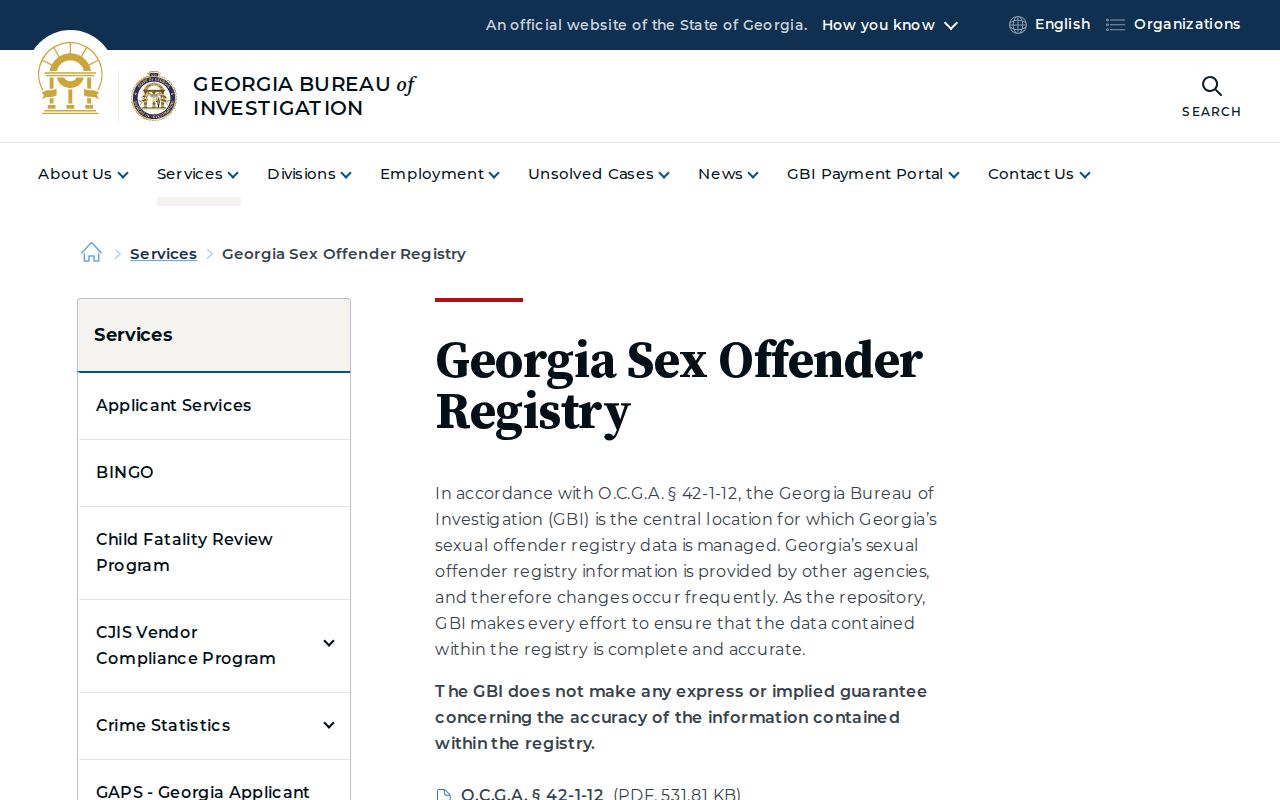
Match the returned photo and identifying fields, then check the record's update date. Similar names and old addresses can produce bad matches when the whole entry is not reviewed.
For a direct safety concern, rely on the registry's official contact and local law enforcement channels. Do not republish an entry without context. Registry status has a statutory meaning, and the source should remain attached to any factual statement about it.
Acworth Vital Records Search
Georgia DPH and county vital-records offices issue statewide birth and death certificates from January 1919 forward. Birth copies require a qualifying relationship or legal role. Certified death copies also have eligibility controls, while the public may request a plain-paper Georgia death record with the Social Security number removed. The first certified birth or death certificate costs $25, with same-order additional copies at $5.
Cobb Probate Court holds marriage records for licenses it issued outside DPH's 1952 through 1996 marriage collection. The Cobb Superior Court Clerk holds Cobb divorce decrees; DPH confirmation is not the decree. Georgia publishes no simple rule that every birth opens after 100 years or every death after 50. Historical work should use archives, marriage books, cemetery evidence, church sources, and census records instead of importing another state's rule.
The Georgia DPH request routes include online, mail, and in-person service, with identity and eligibility documents where required.
ROVER online orders ask for the subject's name, event date and place, parent details when known, the requester's qualifying relationship, identification, address, and payment. Mail requests need a signed form, picture ID, and fee. A completed search produces a certificate or a not-on-file letter, and the search fee is not refunded after service.
Acworth Business Identity Search
A trade name can lead to a legal entity through the Georgia Business Search. Search by business name, control number, registered agent, officer, or designated agent. Results can show entity status, principal office, registered office, formation details, and filing history. These are public filing roles, not proof of a home address or beneficial ownership.
The statewide portal provides a direct route from an Acworth company name to its filed record.
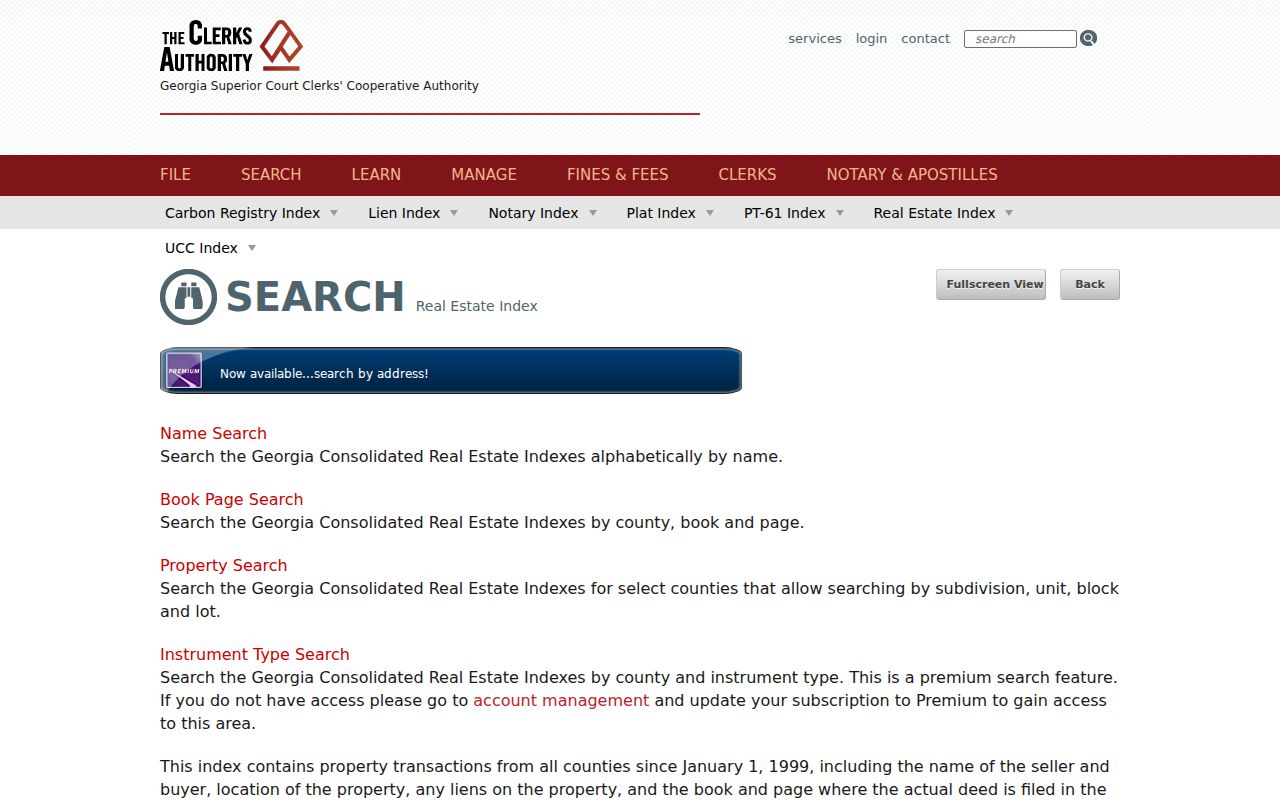
For city-issued occupational records, contact Acworth Business Licensing or submit a focused city records request. State professional verification can then confirm a license number, board, status, and public discipline where the board publishes it.
Business and license data confirm a public role at a stated time. Registered agents accept legal service for an entity, and officers appear through filed registrations. Neither role proves where a person now lives. Compare the entity's control number and filing dates before linking it to an Acworth name or address.
Acworth Voter Record Boundaries
Georgia My Voter Page is an identity-gated self-lookup, not a browse-by-name directory. It can show a registered voter's status, precinct, polling place, districts, sample ballot, absentee status, and participation information. Public voter lists follow separate ordering rules and omit phone numbers, full birth dates, Social Security numbers, and driver-license numbers.
VoteSafe and Safe at Home protect qualifying addresses. Respect those controls and never try to rebuild a protected residence through other records. The complete lookup and file-order process is covered in Acworth voter records.
Note: An Acworth postal address alone does not establish which county registrar holds the voter record.
Acworth Archives After 1864
Cobb's civil archives were lost during an attempt to move them away from approaching Federal troops in 1864. The loss was not a simple claim that every courthouse record burned. Researchers must test each series and then use substitutes: census schedules, postwar marriage records, tax digests, deeds, probate and court microfilm, church registers, newspapers, cemeteries, and private papers.
The Georgia Archives provides the catalog and research gateway for these older trails.
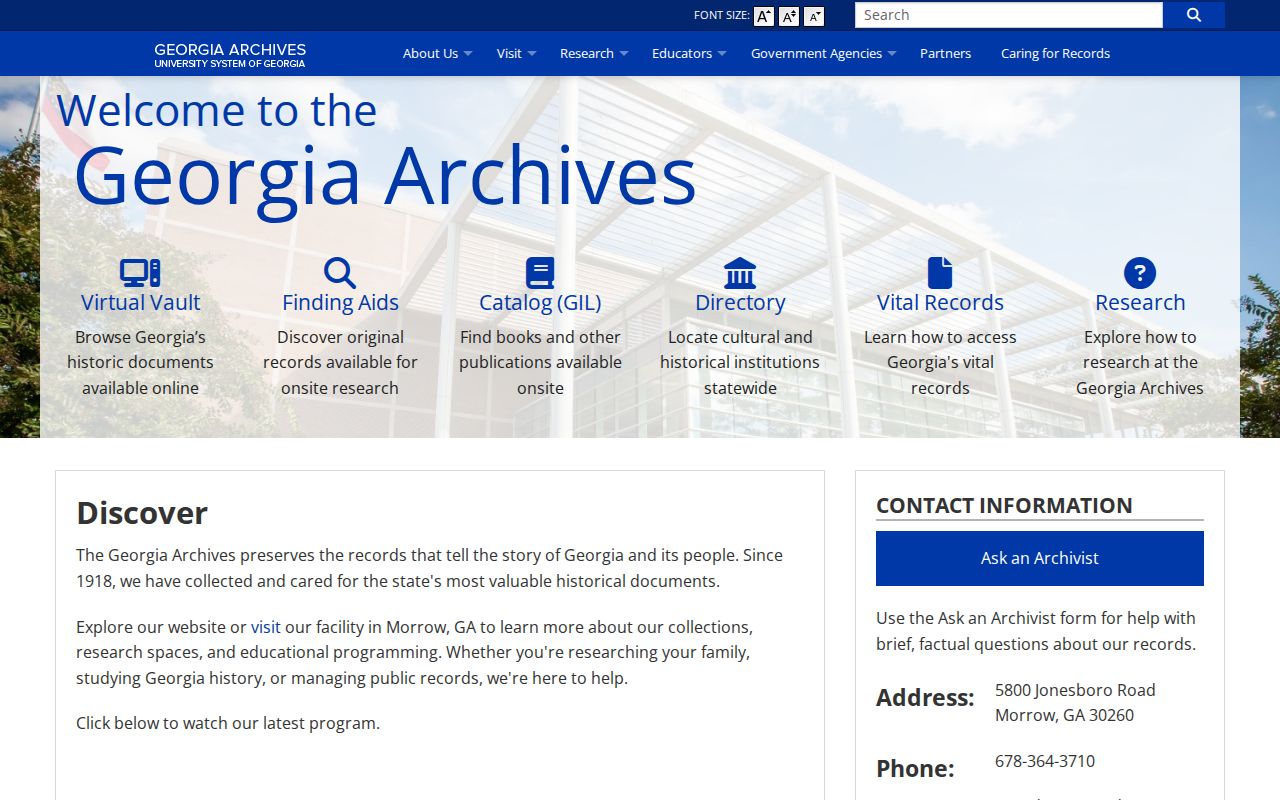
Its holdings include an 1834 Cherokee Territory census for Cobb and near-complete county tax digests from about 1872. The John Washington Hill papers also contain Acworth business dealings and family birth and death information from the nineteenth century.
Requesting Acworth Records Offline
Not every Acworth record has a public name index. City minutes and attachments, occupational-license files, permit registers, cemetery administration, and historic-preservation records may require a request through the City Clerk's official records channel. Municipal Court uses its own records-request route. Send a court filing question to the court rather than the general city queue so staff can identify the correct case system.
The Georgia Open Records Act, O.C.G.A. § 50-18-70 et seq., requires a response within three business days during normal business hours. That response may produce the records, cite a specific exemption, or explain when available records can be produced and what they will cost. The law does not force an agency to answer broad research questions or create a new report. Ask for an existing record series and give enough detail to locate it.
- Name the agency and department that likely created the record.
- Describe the record type, person, address, case, permit, or license.
- Set an inclusive date range and ask for electronic delivery or inspection.
- Request an estimate before costs pass a stated limit.
- Keep the request, delivery time, response, estimate, and any denial.
Georgia permits charges for search, retrieval, redaction, and production based on the lowest-paid qualified employee, with the first 15 minutes free. Paper copies may cost 10 cents per page, and electronic media may be billed at actual cost. A precise request reduces both labor and mistaken results.
If an office withholds material, ask for the exact statute and a redacted version of any part that can be separated. Recent law also requires a custodian to retrieve qualifying agency records held by contractors in covered circumstances. It does not make one agency fetch records belonging to another office.
Acworth Search Gaps and Updates
A blank screen can mean more than one thing. The name may be spelled differently, the property may sit outside Cobb, or the event may predate the online index. A file may also be sealed, restricted, delayed, or held only at the counter. Search name variants, confirm jurisdiction, check coverage, and ask the custodian before concluding that no record exists.
Cobb's 2024 Superior Court software conversion shows why caution matters. The county reported trouble retrieving case information, inaccurate scheduling and notices, and incomplete or inaccurate documents after the conversion. A judicial emergency followed. State, Magistrate, Juvenile, and Probate courts were not affected by that specific event, so the warning must not be applied to every Cobb court.
Use the record number as the bridge from a web result to the official file. In court research, compare party role, filing date, case type, and disposition. In deed research, carry book and page, county file number, legal description, and recording date. For a parcel, retain the parcel ID. These identifiers make counter and mail requests far more reliable than a request for every record tied to a common name.
Restrictions also explain some gaps. Georgia uses the term record restriction for qualifying criminal-history processes, while court sealing depends on the case and legal authority. Juvenile and adoption matters receive special protection. Recent vital certificates require eligibility. Protected voter addresses should remain protected even if another public record seems to contain an older location.
Note: Online coverage is a convenience layer; the clerk, registrar, or archive remains the authority for the underlying Acworth record.
Acworth Voices Beyond Indexes
Some of Acworth's richest name trails never became court indexes. Depot Park History Center presents 19 videos and more than 50 oral histories from longtime residents. The city's Black-history project drew on more than 400 photographs and over 65 interviews about Campbell Hill and Fifth Ward. Those collections link people with streets, churches, schools, businesses, and neighbors.
Use oral history as a lead, then verify names and dates against property, cemetery, probate, vital, and newspaper sources. The Depot Park collection is free and open daily. Acworth Library's FamilySearch affiliate access and the Georgia Room at Switzer Library add restricted images and local reference help when home access stops.
Church and cemetery evidence can bridge gaps in civil registration. FamilySearch catalogs a work drawn from Mars Hill Presbyterian Church records from 1837 through 1874, plus separate historic Cobb marriage indexes whose original titles reflect segregated recordkeeping. Search both series and preserve the catalog's historical wording when citing it.
Place can be as useful as a surname in Acworth research. Bethel AME organized in 1864, and the church, Campbell Hill, Fifth Ward, Liberty Hill Cemetery, Collins Avenue, and the railroad corridor each anchor different community records. Cowen Farmstead offers another example: a large family holding was divided among heirs after Stephen Cowen died in 1900 and left the family in 1918. Deeds and probate should be paired to follow that change. A historic photograph or interview may suggest a person and street, but the parcel, estate, church register, or death record supplies a second source. This method is especially important when older handwritten indexes use variant spelling or when an Acworth address shifted between rural and city descriptions.
Modern Acworth records still benefit from variant searches. Census data show a multilingual community, so try reversed name order, alternate spacing, initials, and transliterated forms. Keep each variation tied to the same parcel, relative, school, employer role, or record number. Similar spelling alone is never enough to merge two people.
Depot Park preserves resident voices and memorabilia. The Black-history project joins interviews with photographs and property research. Georgia Archives adds microfilm, census returns, tax digests, and manuscripts. Together, those sources recover relationships that no single name index can show.